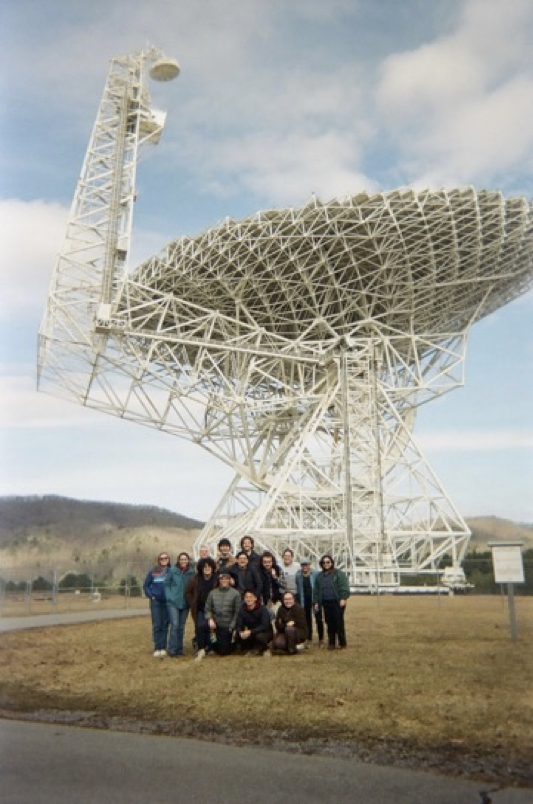
Green Bank Observatory
Field trip for ASTR240/540. Students get to use research-class facilities, tour the receiver lab and control room of the largest steerable telescope on Earth, and visit the National Radio Quiet Zone.
What's happening in the classroom, at Van Vleck Observatory, and beyond
Teaching people about space is one of my favorite parts of being an astronomer. I teach several classes per year at Wesleyan University; please email me if you’re a faculty member interested in sharing materials. I've also taught and tutored physics and astronomy at the high school through graduate levels (including at the Summer Science Program, an organization dear to my heart). I try to keep my skills sharp with formal instruction in pedagogy and education research through coursework and workshops. I strongly recommend the AAPT Physics & Astronomy Faculty Teaching Institute and the AAS Education Newsletter.
Classes taught at Wesleyan:
Field trip for ASTR240/540. Students get to use research-class facilities, tour the receiver lab and control room of the largest steerable telescope on Earth, and visit the National Radio Quiet Zone.
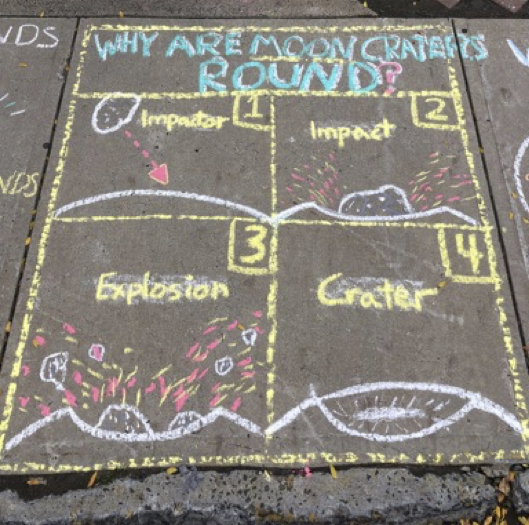
A pandemic-friendly exploration of the visual display of information, in collaboration with Middletown's Russell Library as part of ASTR430. Librarians collected space questions from patrons, and students chalked visually engaging answers on the sidewalks each week.
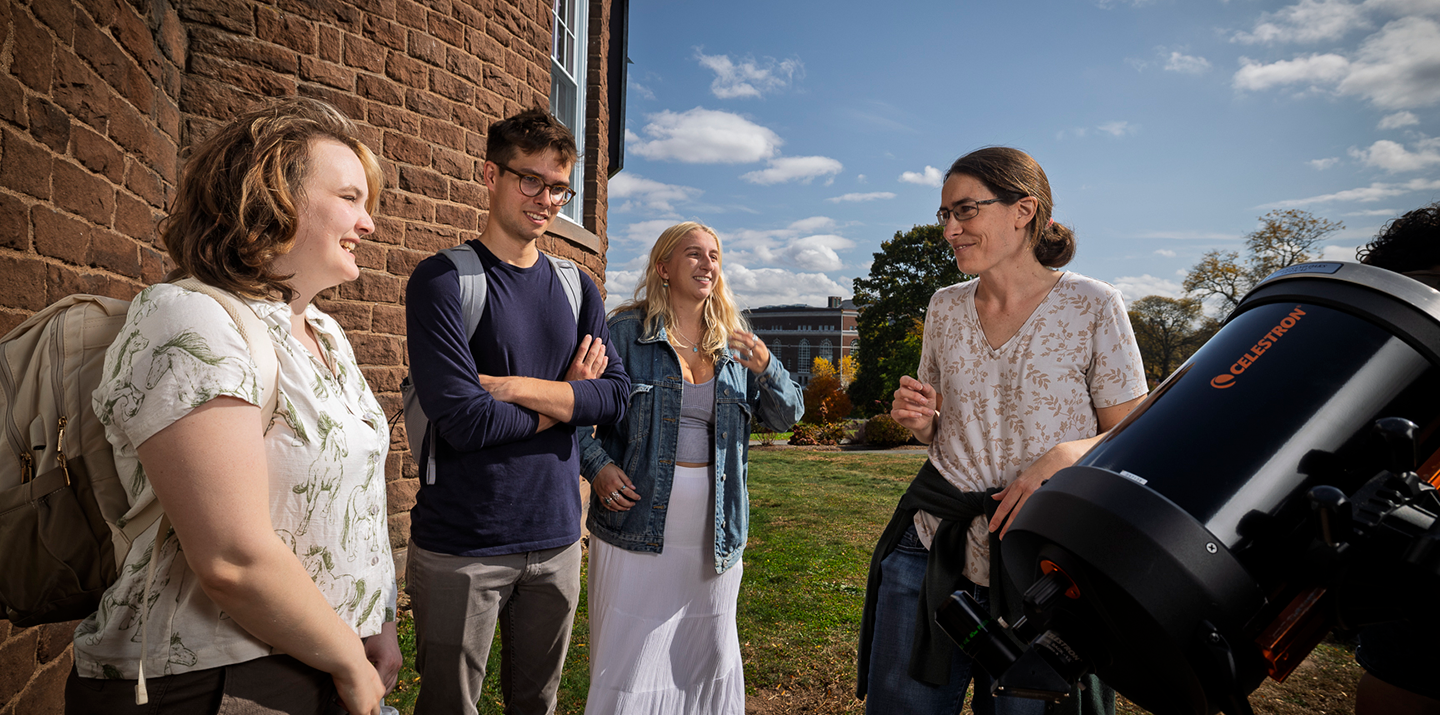
Measuring the rotation of the Sun and getting outside during class
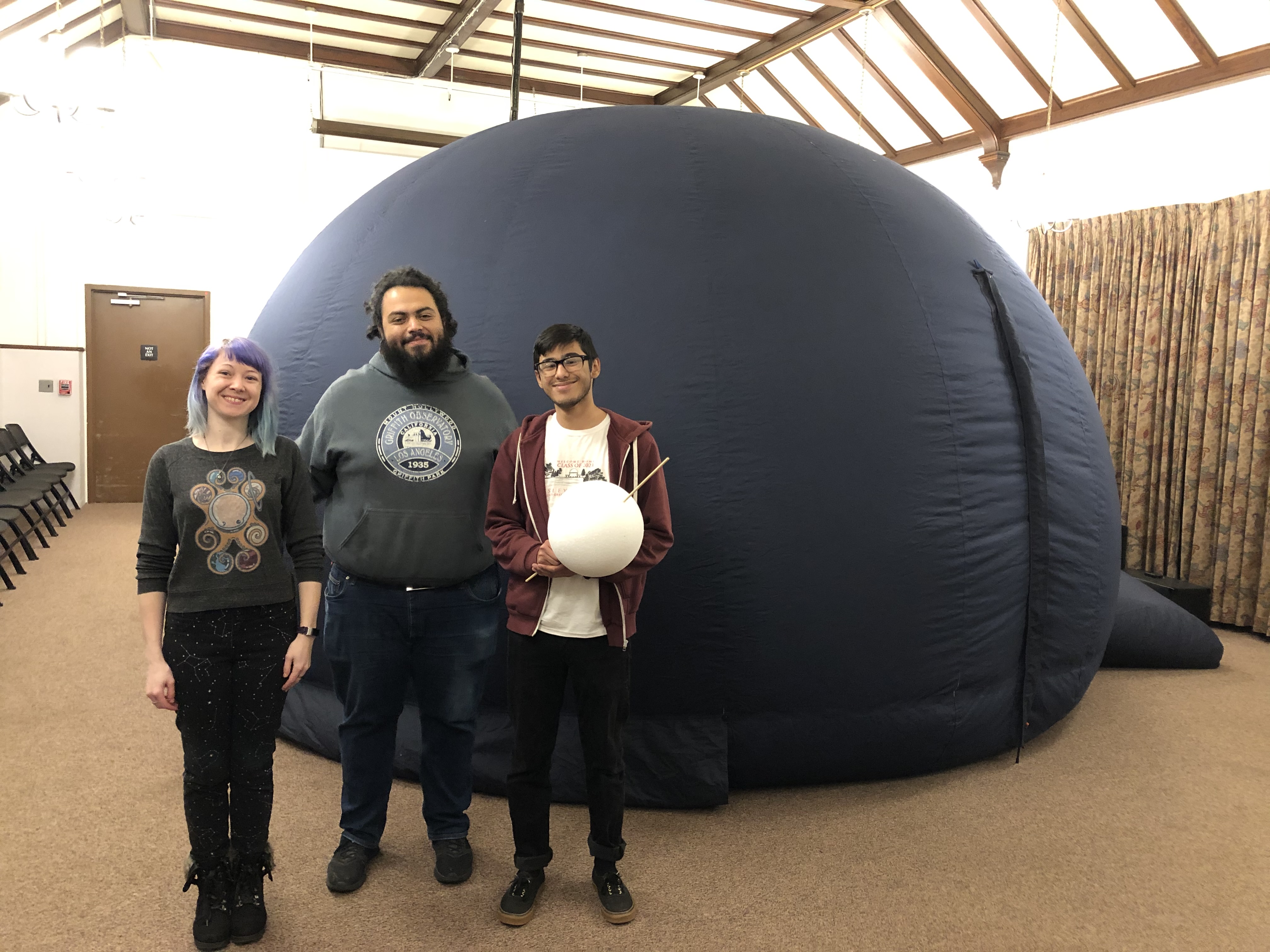
Students in ASTR430 are trained to give presentations in our inflatable planetarium. We usually visit Russell Library and Macdonough School
I love the challenge and fun of communicating science to non-scientists. If you’re on campus, I encourage you to stop by the Van Vleck Observatory for one of our public nights, which are free and open to everyone. The revamp of public nights into Space Nights and Kids’ Nights was funded by a series of my NSF grants. I also work EPO into the astronomy curriculum at Wesleyan by teaching ASTR430: Pedagogy Seminar, a community engaged learning course that trains students to give presentations to the public, including bringing our digital planetarium to local schools and community organizations. I'm also interested in issues of diversity and equality in science, particularly those that are gender-related.
Here are some educational initiatives I've been involved with:
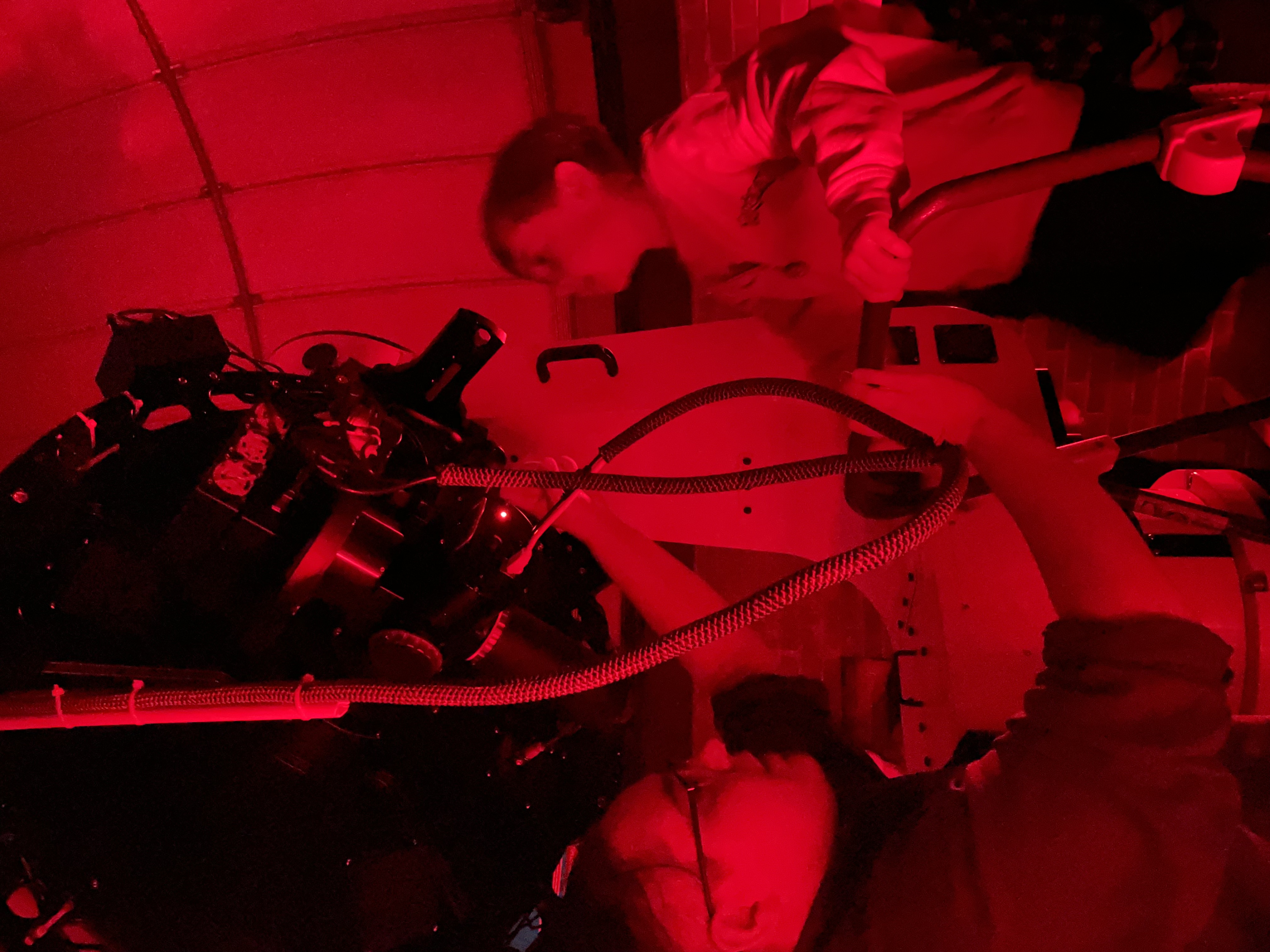
The observatory is open every Wednesday that Wesleyan is in session for Space Nights (aimed at high school ages and above, but open to everyone), and the first Friday of every month for Kids' Nights (aimed at elementary school ages, but open to everyone).
One of my professional goals is to work to make our field a more equitable and inclusive environment. To that end, I have served on two AAS committees: the Committee on the Status of Women in Astronomy (CSWA) and the AAS Code of Ethics Committee (CoEC).
I was an inaugural member and served one term as chair and another as interim chair of the CoEC, which is charged with educating the community about ethical conduct and investigating complaints related to potential breaches of the AAS Code of Ethics. I worked with Publication Committee members to write a AAS newsletter article on citation ethics in publishing.
I also served a term on the CSWA, acting as the liaison between CSWA and the Working Group on LGBTIQA Equality (now SGMA). I led an update to the 20-year-old demographics survey conducted by CSWA and STScI, and I presented the results in the CSWA's STATUS magazine and at a town hall at the 2014 AAS meeting.
It's always rewarding to have the opportunity to share science and ideas with a wider public audience. Here are a few one-off interviews I've done:
I have served as the faculty advisor for WesWIS for the past 11 years. We seek to build community and provide professional development opportunities for gender minorities in the sciences at Wesleyan. In 2019, we were selected as Wesleyan's student organization of the year.
People of all majors and genders are always welcome at our events, so please stop by!
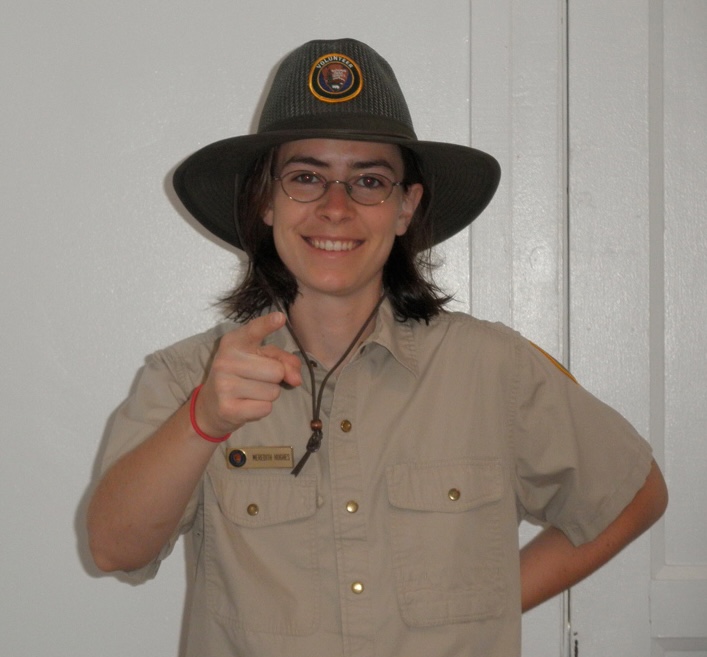
During the summer between grad school and postdoc, I spent an unforgettable summer as an Astronomy Volunteer in Parks (Astro VIP) at Bryce Canyon. I learned so much from the rangers -- who were absolute science communication wizards -- and it was a privilege to share my love of science with so many visitors from around the country and the world.
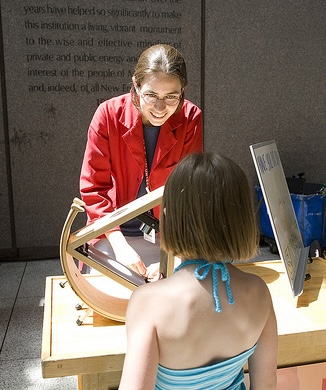
For all 5 years of my PhD program, I spent Friday afternoons volunteering as an Exhibit Hall Interpreter at the Museum of Science, Boston. I can't say enough about the amazing work the MoS does in communicating science with the public, and I loved wandering the halls with a demo or a live animal to engage the visitors.